
The Fallacy of Constant Connectivity
Mobile apps engineered assuming unbroken high-speed bandwidth fail in production. In fulfillment centers, brick-and-mortar retail stores, and remote routes, sporadic signal drops cause timeout screens that destroy customer trust and dump checkout funnels.
Local Persistence and Idempotent Sync Engines
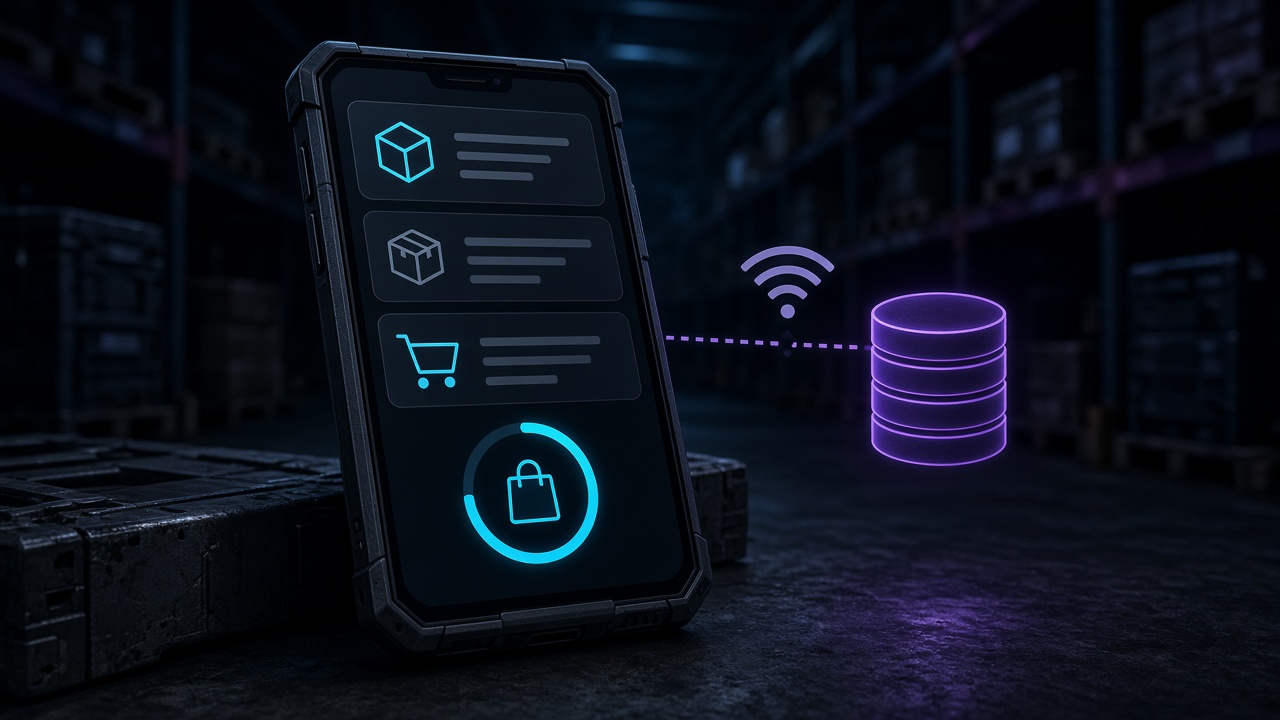
An offline-first architecture commits user actions directly to an embedded local database. A background worker reconciles pending mutations to backend APIs whenever connectivity is restored, resolving conflicts deterministically.
Conversion Impact and ERP Integrity
The user experiences zero-latency UI responses. When transactions sync upstream, events feed corporate ERPs and CRM pipelines without duplicate charges or orphaned records.
Quadro Comparativo Estratégico
| Architectural Metric | Legacy Online-Only App | UpBase Offline-First App |
|---|---|---|
| Behavior on Disconnect | Blocks user with network error modal | Seamless navigation and checkout queue |
| UI Interaction Latency | Tied directly to API network response | Zero-latency local write (sub-10ms) |
| Conflict Resolution | Prone to ERP race conditions | Deterministic timestamp & CRDT reconciliation |
| Transactional Integrity | Dropped sale upon connection drop | Enqueued and reliably processed upstream |
Perguntas Frequentes sobre a Decisão
How is locally stored data secured on the client device?
We enforce AES-256 encrypted local datastores with keys managed by native OS Keychains and Keystores.
Can UpBase modernize existing apps to offline-first?
Yes. We conduct architectural audits to decouple client UIs from synchronous API calls and introduce reliable background sync workers.